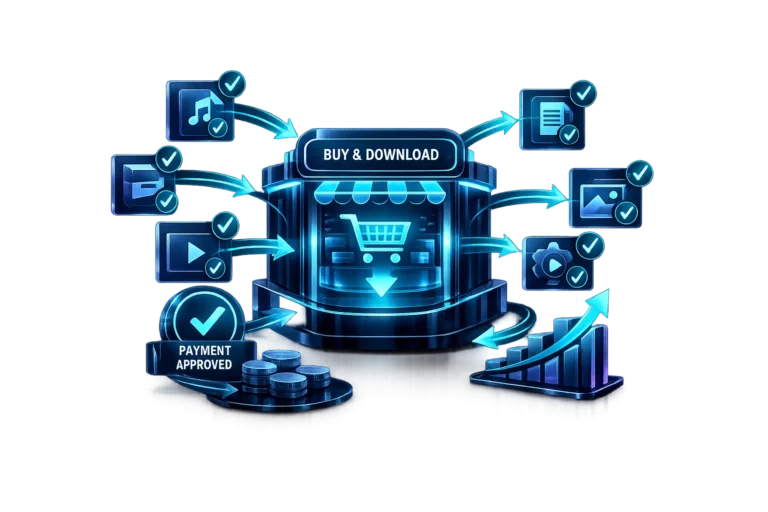


Starting a digital product business sounds exciting — until you realize you need to create the product.
Most beginners get stuck here.
They think they must write an ebook, design templates, build a course, record videos, or create software before they can sell anything. That assumption alone stops thousands of aspiring entrepreneurs from launching.
But here’s the truth:
You don’t need to create your own digital products to start a profitable digital product business.
Yes — you can legally resell digital products, automate delivery, and build a scalable online income system without ever opening Canva or recording a course.
In this guide, I’ll show you exactly how to do it — step by step.
Why Digital Products Are the Smartest Online Business Model
Before we dive into the “how,” let’s understand the “why.”
Digital products have unique advantages:
- No inventory
- No shipping
- No storage
- No manufacturing cost
- Instant global delivery
- High profit margins
- Unlimited copies
Unlike physical ecommerce, digital product businesses scale without operational chaos. Once your store is built and automated, the system works 24/7.
That’s why more entrepreneurs are shifting toward automated digital stores instead of traditional ecommerce.
Step 1: Understand the Resell Model
You don’t need to create digital products — you can legally resell products with resale rights.
There are different types of licenses:
- Personal Use
- Commercial Use
- Resell Rights
- Private Label Rights (PLR)
When you acquire products with proper resale or usage rights, you’re allowed to sell them as part of your store.
This model is ideal for:
- Beginners
- Non-technical founders
- Entrepreneurs with limited time
- People who want to launch fast
Instead of spending months building a product, you focus on positioning, branding, and marketing.
Step 2: Choose a Profitable Niche
Even if you’re reselling, niche selection is critical.
Avoid random product combinations. Focus on structured, high-demand niches like:
- AI & Productivity
- Health & Fitness
- Finance & Side Hustle
- Marketing & Business
- Design & Templates
- Self-Improvement
A niche-focused store converts better than a general “everything digital” store.
If you’re unsure which niche fits your goals, structured service providers like DigitalSellify can help you choose strategically based on demand and scalability.
Step 3: Build a Professional Digital Store
This is where most beginners fail.
They try to:
- Buy hosting
- Install WordPress
- Configure WooCommerce
- Upload products
- Set up payment gateways
- Connect automation
- Create delivery workflows
It becomes overwhelming.
Instead of struggling with technical setup, many entrepreneurs choose a done-for-you digital product store model where everything is professionally structured from day one.
Your store must include:
- Secure payment integration
- Automated digital delivery
- Mobile optimization
- Conversion-focused layout
- Clear product structure
Without proper infrastructure, even good products won’t sell.
Step 4: Automate Everything
Automation is what makes digital product businesses powerful.
A properly structured system should:
- Accept payment
- Deliver product instantly
- Send confirmation email
- Add customer to email list
- Trigger upsell or follow-up sequence
This eliminates manual work.
Instead of handling files and emails manually, your system works automatically.
That’s the difference between a hobby store and a scalable digital income infrastructure.
Step 5: Add a Simple Sales Funnel
If you want higher revenue per customer, add:
- Landing page
- Upsell flow
- Email automation
- Follow-up sequences
Even a basic funnel increases conversions significantly.
You don’t need a complex multi-page funnel in the beginning. Start simple:
- Product page
- Checkout
- Upsell
- Thank-you page
Structure beats complexity.
Step 6: Focus on Traffic & Positioning
Once your store is live, your job shifts to:
- Organic traffic
- Social media content
- YouTube
- Paid ads
- Email list building
Your infrastructure handles delivery — you focus on growth.
This is why serious founders invest in a properly built system from the beginning. It saves time and prevents costly rebuilds later.
Common Mistakes Beginners Make
Let’s clear some myths.
❌ Trying to Create Everything Themselves
Result: Delay + burnout.
❌ Choosing Random Niches
Result: No brand positioning.
❌ Skipping Automation
Result: Manual chaos.
❌ Using Poor Design
Result: Low trust and low conversion.
❌ Expecting Instant Income
Digital businesses require positioning and marketing effort. Infrastructure removes friction — it doesn’t replace strategy.
Is This Model Legal?
Yes — as long as you use properly licensed digital products.
Always verify:
- Resale rights
- Commercial rights
- Usage limitations
Never sell copyrighted content without permission.
A structured service provider ensures licensing clarity so you don’t face compliance issues.
Why Done-for-You Digital Stores Are Growing
Many founders now prefer infrastructure over DIY.
Instead of:
- Learning tech
- Making design mistakes
- Wasting months in trial and error
They invest in a professionally structured digital store and focus on scaling.
If you’re serious about building a scalable digital income system, explore how a complete infrastructure setup works on the services page:
👉 https://digitalsellify.com/services/
And if you want to see plan options:
👉 https://digitalsellify.com/pricing/
Need something tailored?
👉 https://digitalsellify.com/get-a-quote/
Final Thoughts
You don’t need to create products to start a digital product business.
You need:
- The right niche
- Proper licensing
- Strong infrastructure
- Automation
- Consistent marketing
Creation is optional.
Structure is essential.
Digital product businesses reward systems, not chaos.
If your goal is long-term scalability, start with a system designed to grow — not something you’ll need to rebuild in six months.